When Parents Need More Than Babywearing Help
Jan 06, 2026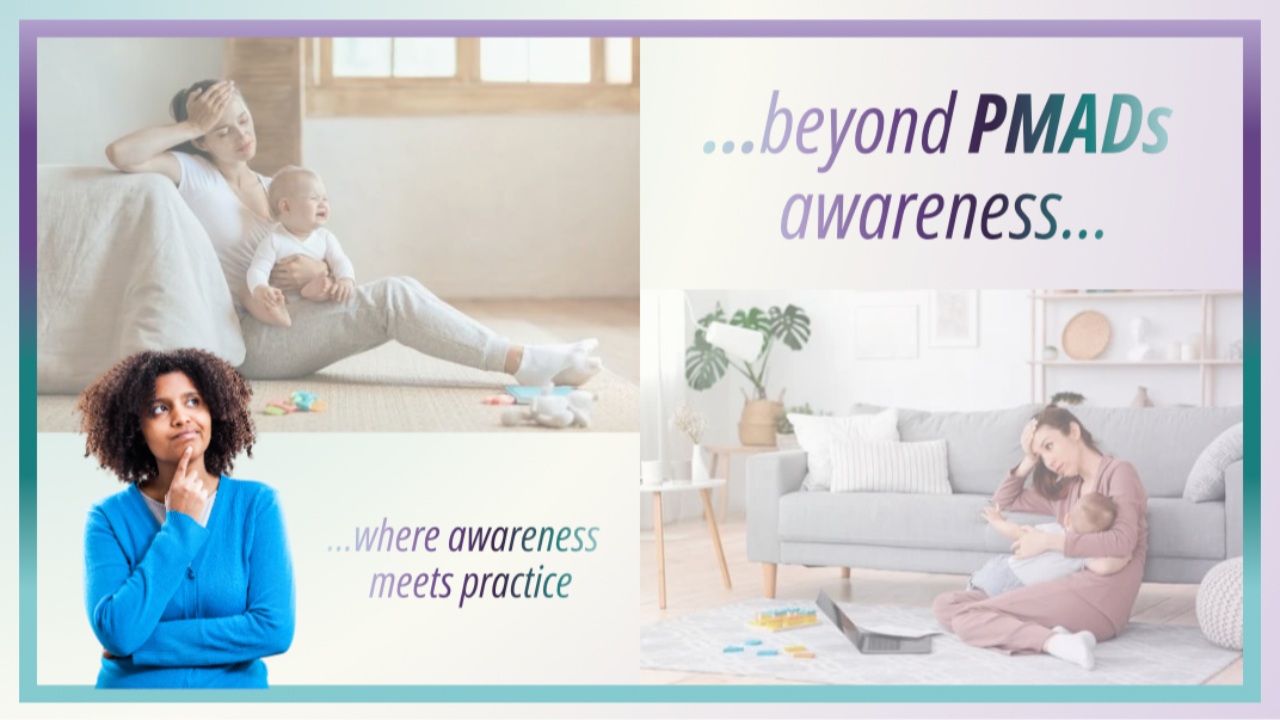
• • •
There’s a moment many babywearing educators remember vividly: the moment they realize something more is going on with a client.
Not a carrier issue or a fit problem, but something far more delicate.
I still remember mine.
It was 2009. A mother came in with her six-week-old baby, and what stood out immediately wasn’t the carrier…it was her hands. They shook violently as she tried to change her baby’s diaper. She moved slowly, carefully, as if any wrong move might cause harm. It took nearly an hour to finish that diaper change.
This isn’t an exaggeration.
Her breathing was shallow. Her heart rate visibly climbed when her thoughts started racing. When she walked with her baby in the carrier, the anxiety followed, written clearly across her face before she ever said a word.
At the time, there was no language for what I was seeing. Postpartum anxiety wasn’t widely discussed. There was no guidance, no training, no clear sense of how to help…only the feeling that stepping in too quickly or brushing this mother aside would do more harm than good.
I was overwhelmed with the weight of not knowing if I was doing the right thing.
Babywearing consultants are often in a unique position.
We see families up close, over time, in moments of vulnerability. We notice the shaking hands, the racing breath, the overwhelm that doesn’t settle when the carrier is adjusted just right.
And yet, many professionals still aren’t prepared for what comes next.
In today’s landscape, being unprepared doesn’t just mean feeling unsure. It sends a message.
Whether we intend it or not, it can communicate to a client that their mental health isn’t really our concern. That we care when it’s a trending topic, a social media post, or “Mental Health Awareness Month,” but not when it shows up quietly, inconveniently, in real life.
Inaction is not neutral.
Without practical training, professionals are often left guessing in the moment. We fall back on personal experience, well-meaning reassurance, or silence. And while those responses may come from care, they can unintentionally minimize, dismiss, or even exacerbate what a parent is experiencing.
Saying the wrong thing can increase shame.
Saying nothing can increase isolation.
Moving too quickly can heighten anxiety.
Stepping back entirely can feel like abandonment.
These are real risks.
And they don’t come from lack of compassion.
They come from lack of preparation.
Supporting families through PMADs isn’t about diagnosing or becoming a therapist. It’s about knowing how to respond when a parent shares something vulnerable. It’s about having language that grounds rather than alarms, clarity about what’s typical and what’s not, and confidence in when and how to refer to appropriate care.
It’s about taking mental health seriously, not just in theory, but in practice.
Most PMADs trainings stop at awareness. They tell you what the disorders are and what the symptoms look like…and then they leave you there.
But awareness alone doesn’t help when you’re sitting across from a shaking parent with a racing heart and a baby who won’t settle.
That’s why we’re offering a 2-hour live PMADs workshop, taught by Olivia Bergeron, LCSW, PMH-C (I’ll be there too!-- Joanna).
This workshop is intentionally practical. It’s about language, scope, real-life scenarios, and what to do when you’re in the room with a family who is struggling.
There will be time for questions.
Real questions.
The ones you don’t always feel comfortable asking.
The ones that come from being in the work, not just learning about it.
Families deserve more than awareness.
They deserve prepared, thoughtful, grounded support.
And as professionals who work so closely with parents in vulnerable moments, I believe we owe them that.