“Is Babywearing Safe?” How Educators Can Answer Without Creating Fear
Feb 24, 2026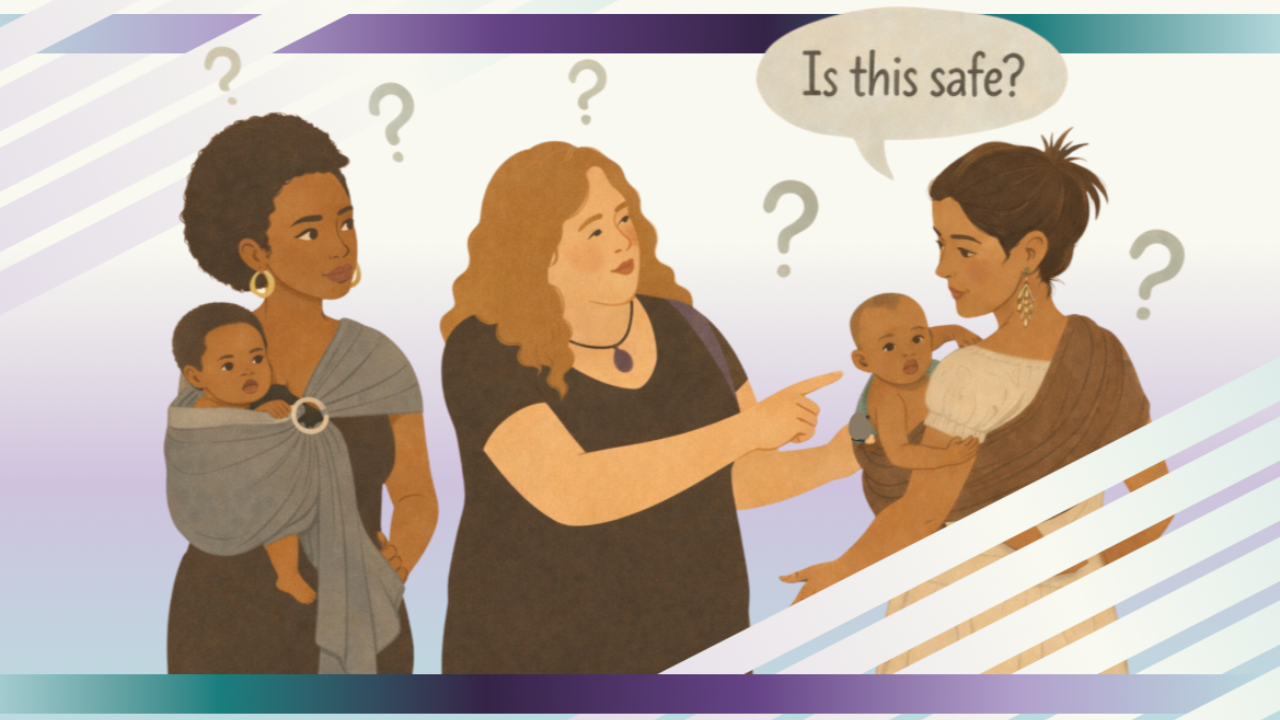
At some point, every babywearing educator hears this question:
“Is this safe?”
It might come from a brand-new parent holding a newborn for the first time, or a grandparent watching from across the room. It might come from a stranger at a grocery store. And sometimes it remains unspoken, shown only in the hesitation of a caregiver’s hands as they refuse to take their hands off their baby in the carrier.
How you respond to this question matters more than you might realize.
You might unintentionally create anxiety where initially there was only curiosity. You might just run roughshod over their intuition and lose the opportunity to expand their babywearing knowledge.
Imagine you have a mom and her 3-week-old, 7.5-pound baby in front of you. You're near the end of your 'drop-in hours.' She's using a newborn buckle carrier that's not the best or ideal fit, but it's certainly safe. At least the last time you were helping her, it was.
Now, though, as she asks you for help since she doesn't "feel comfortable" in the carrier, you realize there are a few things that might help her enjoy using it more. After discussing waistband placement, the mom points to the buckle and webbing that attaches to the sides of the panel, and the very large gaping hole that seems to be between the webbing and the waistbands, and she asks,
"Is this safe?"
And this moment, it's ever so tricky. And potentially ever so impactful.
Pause Yourself Before You Answer
Generally speaking, our instinctive responses tend to fall into two camps.
You might offer a quick, confident “Yes!” and move on, hoping reassurance alone will do the job.
You might launch into safety acronyms, positioning rules, and lists of small tweaks to take to prevent injury or death.
But what if she simply meant, 'Is the buckle safe?' A simple “yes” may feel dismissive, especially if the caregiver has a specific fear.
And a flood of information, while well-intentioned, can introduce risks the caregiver hadn’t considered and increase their anxieties. Suddenly, they’re wondering if they’re doing things wrong, instead of feeling supported in what they’re already doing well. Both approaches are well-intentioned, and I think we should recognize that, but we miss a crucial step when we jump feet-first into answering this question.
Let's explore a Third Option: the pause and query
“Thanks for asking. Can you share what's concerning you when you ask, is this safe?”
Let's get more information first. When asking, “Is babywearing safe?” it's unlikely the caregiver is asking a generic question.
They might be wondering:
- Is this buckle safe?
- Can my baby breathe slumped down like this?
- Does this hurt their hips or spine?
- What if I trip or fall?
- Is this safe for me after birth?
- I saw a comment online that scared me. Is that true?
In fact, I can't list all the potential underlying thoughts that prompt a caregiver to ask this question. However, if you answer the question you think they’re asking, instead of the one they are asking, you risk reading your understanding of what you look for in terms of 'safety' into their question.
So a simple follow-up question asking, “What do you mean by safe?” does a few powerful things at once:
- It slows the moment down.
- It centers the caregiver’s concern rather than yours. (Because, of course, you're teaching them to use the carrier safely, that's the given.)
- It communicates respect and curiosity.
- It prevents unnecessary fear from being introduced.
Most importantly, it allows you to respond with specificity, which is far more reassuring than generalities.
Folding Safety Into Everything You Teach
It’s woven into every step.
When you teach positioning, when you help a caregiver feel how snug support feels, when you teach them howeasy it is to check on their baby and what they are looking for when they do, when you normalize slowing down, adjusting, or taking a break…you’re teaching safety.
Caregivers don’t need to memorize acronyms to carry safely,
They need to learn what safety feels like.
One of the most empowering things you can offer a caregiver is the ability to recognize when something feels off and to trust themselves enough to respond. Instead of framing safety as a list of rules to follow perfectly, you’re framing it as an ongoing relationship between caregiver, baby, and movement.
Because babywearing isn't a static practice, it's ever-evolving.
And it's something we, as educators, can embrace: that approach builds confidence instead of anxiety.
Ideal vs. Safe: Holding Space for Real Life
In certain spaces, it’s easy to talk about ideal positioning, ideal conditions, and ideal fits. But in the real world, caregivers are moving through imperfect moments. They’re adjusting on the fly. They’re responding to screaming babies, older siblings, errands... well, you know, that thing called life. And this is where your educator space will shine.
If we treat “ideal” as the only acceptable version of “safe,” those ideas can get weaponized, especially online. Caregivers end up policing each other, shaming themselves, or abandoning babywearing entirely because they worry they can’t do it “right.” They might think they need a new carrier, but they don't have the money for one. Or they don't have the mental capacity to learn something so specific that is so risky.
- "Yes, there are principles that support safety, and I will bake them into every aspect of your learning, making safety the default but without worry."
- "Every carry will not look picture-perfect, but that doesn't mean it won't be safe. And working with me will help you learn to make adjustments on the fly so you can navigate daily life easily."
- "Safety is contextual, responsive, and adaptable. And something parents throughout time have managed, and so can you."
That perspective protects caregivers from unnecessary fear and helps them stay engaged rather than give up. Plus, they know where to turn when they have questions.
So what’s the verdict?
When a caregiver asks, “Is babywearing safe?” they're rarely looking for a yes/no verdict. They’re likely looking for reassurance, clarity, and a sense that someone knowledgeable is paying attention to their unique situation.
Your job, as an educator, isn’t just to provide acronyms, checklists, and rules. It’s to help caregivers develop awareness, confidence, and the ability to respond thoughtfully as circumstances change. Safety, in this context, becomes something dynamic and relational, built through understanding, practice, and ongoing attention. When taught this way, safety stops being a source of anxiety and starts becoming a shared language between caregiver and baby, beyond just babywearing. One that grows with experience, adapts to real life, and helps families feel capable and connected.