The Quiet Shift: Active to Passive Carrying
Jan 13, 2026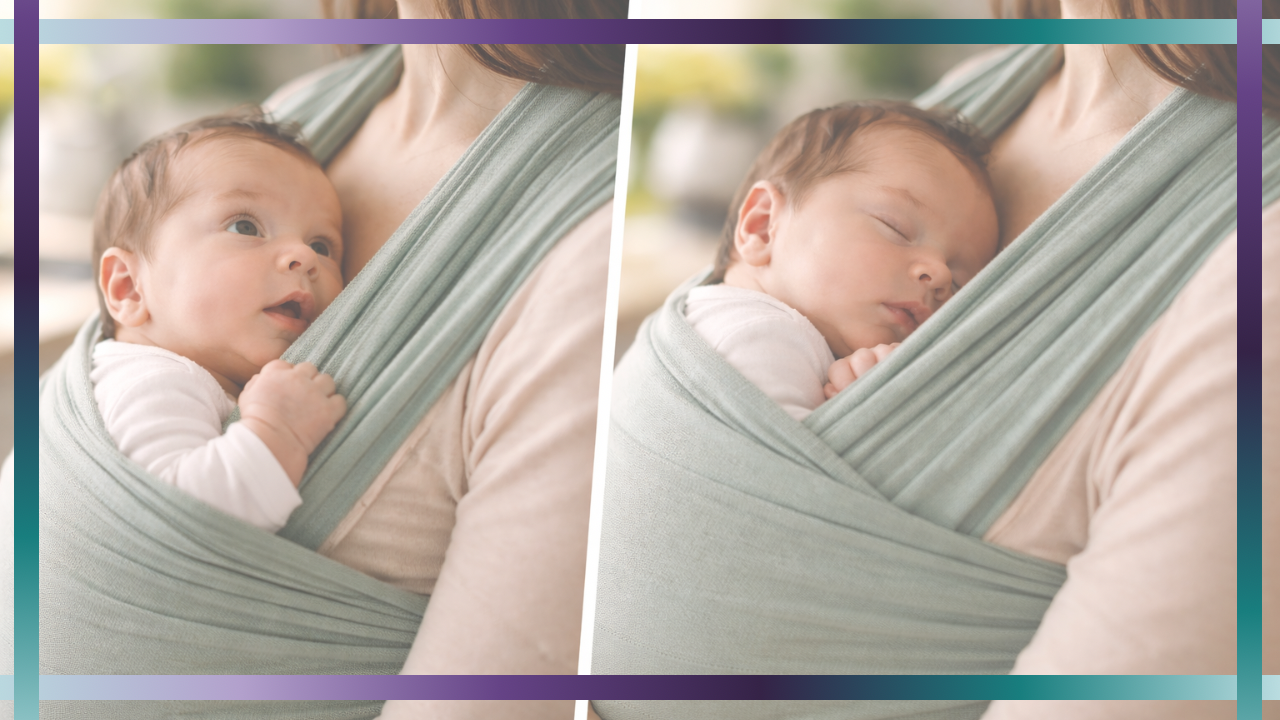
When the Carry Changes: Teaching Active vs Passive Carrying
Through the Moments That Matter Most
• • •
Picture this
A parent, Ana, is swaying gently through her morning routine with her 6-week-old son, Mateo, tucked against her chest in a stretchy wrap. The kettle is boiling. The dog is circling with hopeful eyes. Sunlight cuts across the kitchen floor in long morning stripes.
Ana moves easily. Mateo is wide-eyed and alert, hands curled against her shirt, subtly engaged and responsive to her every movement.
Whenever Ana shifts her weight, Mateo shifts as well. He adjusts his little torso, shifts his head to glance up at her, and braces his body ever so slightly when she leans to reach the dishwasher. It feels natural, effortless. Mateo is helping.
And then, somewhere between wiping the counter and turning off the stove, something changes.
His head softens into her chest.
His body melts.
His legs relax.
The muscle tone dissolves into the heavy warmth of sleep.
What she doesn’t notice is that everything about the carry has just changed.
Teaching Active vs Passive Carrying
This moment is the pivot point that educators must understand deeply and teach intentionally.
When Mateo was awake and engaged, he was in active carrying. His muscles were working with the carrier and his caregiver. He participated in holding himself, refining micro-movements, and adjusting his posture.
As soon as he fell asleep, he moved into passive carrying.
His muscles stopped contributing. Gravity took over. Every bit of softness now relies entirely on the caregiver and the carrier to maintain alignment and support.
This is where the carrier itself matters much less than the babywearing education Ana has received.
Unless someone has taught Ana what this transition means, she has no reason to pause, reassess, or adjust anything. And that’s often where problems begin. Not from misuse, but from not noticing subtle shifts, or not knowing they matter.
• • •
How Educators Can Use Moments Like This
Most caregivers recognize the moment their baby suddenly feels heavier. Educators can anchor teaching in that shared experience instead of starting with a checklist.
Helping caregivers learn what to feel builds intuitive, responsive babywearing skills that last far beyond a single consult.
Active and passive carrying is not a milestone. Babies move between these states many times in a single day. Babywearing is not static. It is a moving relationship.
“Babywearing is an active and dynamic process.”
Joanna McNeilly, CBWS Founder
When you teach active versus passive carrying, you offer caregivers more than technique. You help them understand when to pause, how to adjust intuitively, and how to respond with confidence to their baby’s cues.
That’s the power of babywearing education. You are so much more than a walking tutorial or a simple fit-checker.
Want to get really good at teaching moments like this (without turning every consult into a frantic checklist)?
That’s exactly what we build in Foundations in Babywearing Education.