New Babywearing Research Strengthens the Case for Skilled Support
Jun 09, 2026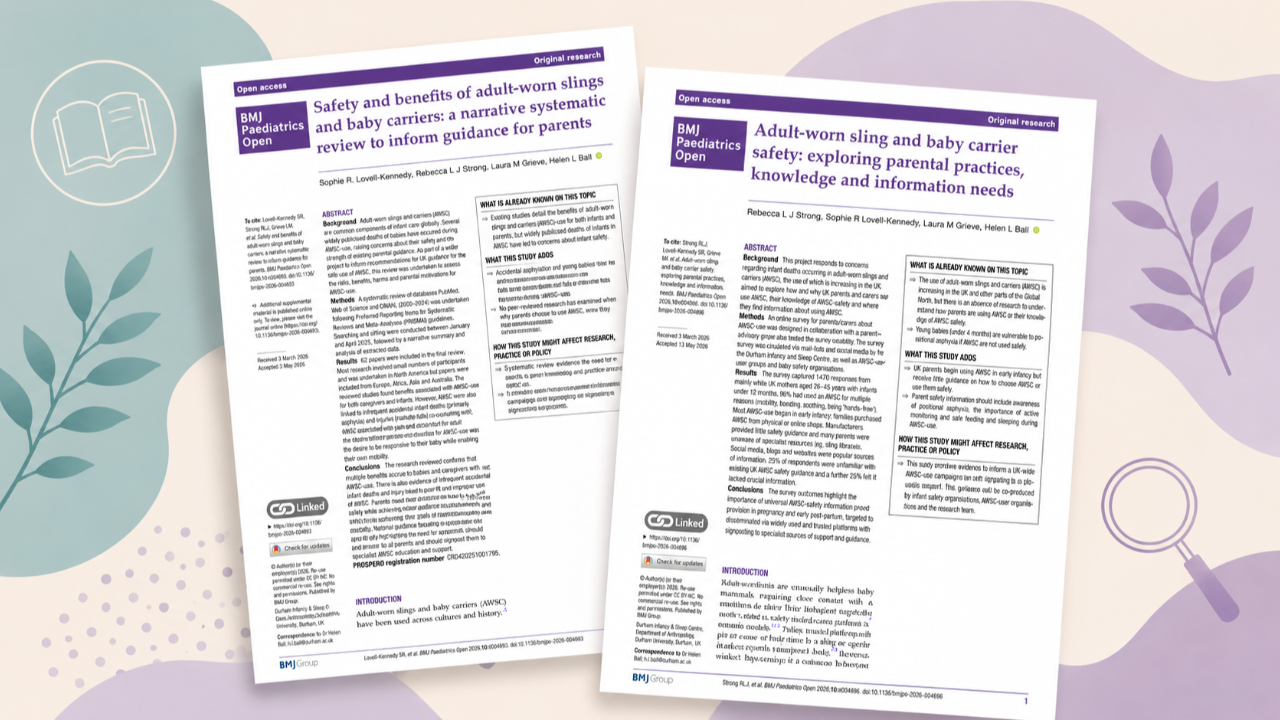
Something our field has waited a long time for arrived this month. Two new studies on babywearing have been published in BMJ Paediatrics Open, both open access and free for anyone to read. The questions we answer every day have finally been put to research.
What was published
The first is a systematic review drawing together 62 studies on the safety and benefits of carrying. The second is a survey of 1,470 UK parents on how they choose carriers, what they understand about safe use, and where they turn for help. Both come from the Durham Infancy and Sleep Centre, funded by The Lullaby Trust and Teddy's Wish.
Why this matters for us as educators
The review confirms in one place what many of us have known from practice. Carrying brings real, documented benefits: kangaroo care for premature and opioid-exposed babies, longer breastfeeding, bonding and secure attachment, healthy hip development, and stronger parental mental health.
It also documents the real, if infrequent, risks, such as asphyxia and falls, almost always tracing back to poor fit or positioning. That is the entire case for skilled support, now citable.
The survey names this plainly. More than three-quarters of parents who reached a sling library or educator came away genuinely informed about fit and positioning. Online, where most carriers are now bought, almost no one received help. And when asked who they trust for carrier advice, parents named educators and sling library coordinators, not health professionals.
This gives us something we haven't had before: evidence to stand on.
When we explain our value to a parent, a hospital, a health visitor, or a manufacturer, we're no longer speaking from experience alone. We can point to peer-reviewed research from the UK showing that skilled support changes outcomes.
It's also shaping what comes next. This work is informing new UK national guidance on safe carrying, co-produced with educators and infant safety organizations.
Our field is at the table. And for those who look closely at the references, some of the research we already share turns up there too.
These are worth reading in full, saving, and putting in front of the parents and professionals in our world. This is now part of our evidence base, and it has our field's fingerprints all over it. YAY.