...So You’ve Been Invited to Speak at a Babywearing Fitness Class…Now What?
Jan 20, 2026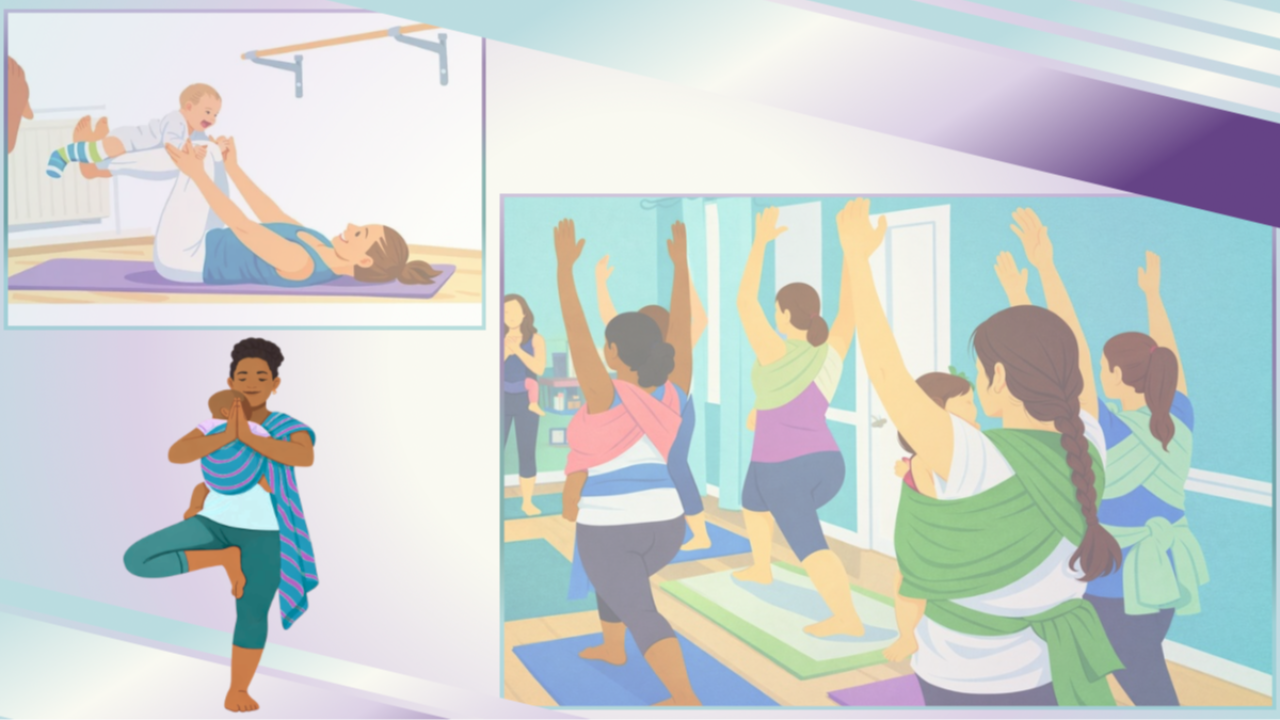
Babywearing fitness classes are an exciting place for educators to show up. They’re energetic, community-driven, and full of caregivers who are eager to learn. They’re also uniquely complex.
In these spaces, caregivers aren’t just carrying their babies - they’re moving dynamically while supporting another body that is changing, responding, and regulating moment to moment. Movement changes alignment. Heat changes comfort. Sensory input changes how babies cope. And the postpartum body adds another layer entirely.
Your role in this setting isn’t simply to “check carriers.” It’s to understand how babywearing behaves differently in motion...and to help caregivers and instructors navigate that in real time.
• • •
Positioning Looks Different When Bodies Are Moving
A carrier that feels fine while standing still can behave very differently during squats, lunges, or cardio. Subtle issues become amplified once movement is introduced.
Rather than overwhelming caregivers with checklists, focus on a few high-impact questions that they can revisit as class progresses:
-
Do the wearer and baby move as one unit?
-
Is the baby easy to see, feel, and check without stopping?
-
Does the carrier support the baby’s natural position without forcing or compressing?
These quick checks matter more in motion than any single static “ideal.”
Stimulation Matters, Especially in Fitness Spaces
Fitness classes are sensory-heavy environments: music, movement, heat, voices, lights. For young babies, this is a lot.
Forward-facing, in particular, creates challenges here, not because it’s a forbidden position, but because it removes a baby’s ability to visually access their caregiver while simultaneously increasing sensory load and physical demand.
Helping caregivers understand why certain positions work better in this context builds confidence without fear.
Wearer Comfort Is Not Optional
Movement with a baby magnifies biomechanical strain. Alignment that feels “okay enough” while standing can quickly lead to discomfort or pain under load.
This is where educators can offer something most fitness certifications don’t cover: helping caregivers recognize how babywearing changes their movement patterns and what their body is telling them in the moment.
Not every sensation is a red flag, but not everything that’s common is normal, either.
• • •
Babies Aren’t Passive...Until They Are
When awake, babies actively participate in carrying. They adjust, engage, and respond to movement.
When they fall asleep, that participation drops away.
In a fitness environment, that transition matters. Sleeping babies often need re-checks, subtle adjustments, and closer monitoring...especially amid distraction. Teaching caregivers to notice and respond to this shift is one of the most important skills you can model.
Learn more about active vs. passive carrying here
Why Training in Both Worlds Matters
This is also why we firmly believe that anyone teaching babywearing movement should be trained in both their movement modality and babywearing education.
In a fitness class, parents will naturally look to the person leading the room as the expert. They assume that if something feels off, confusing, or uncomfortable, that person knows how to help. Movement certifications rarely cover infant development, sensory regulation, or the nuances of carrying a baby during dynamic activity. Babywearing education fills those gaps.
As a babywearing consultant entering this space, your job isn’t to compete with the instructor...it’s to complement them. You have limited time and attention. Your goal is not to perform a quick fit check or demo a new carrier, but to intrigue caregivers, help them understand what matters in this context, and set them up for success long after the class ends.
• • •
This Is Where Education Goes Beyond Technique
Babywearing fitness classes reveal things that don’t always show up in everyday carrying: sensory overload, alignment challenges, shifts in baby participation, and caregiver fatigue.
A trained educator can see these patterns emerging and address them preventatively, without disrupting the class.
That kind of impact doesn’t come from knowing more carriers.
It comes from understanding context, bodies, babies, and movement.
That’s the difference between offering information and providing real education.