Mapping the Babywearing Ecosystem
Mar 31, 2026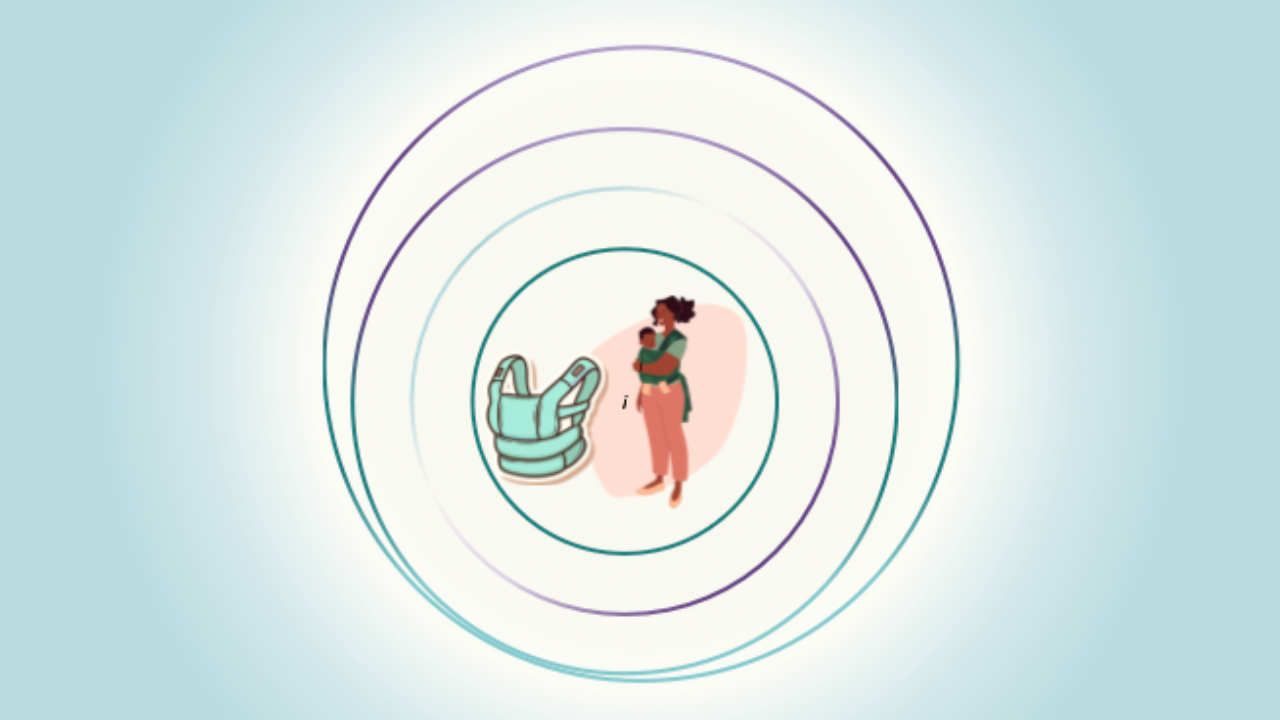
Charlotte stands in her kitchen, bouncing her baby against her shoulder while three carrier tabs sit open on her phone.
One is from her favorite influencer, “best baby carriers for newborns.”
One is a link from her lactation consultant, a review from a parenting blog.
One is a resale listing her sister sent because “this brand is supposed to be really good.”
She wants to choose carefully. Money. Comfort. Safety. They all matter. She doesn’t want this purchase to end up just one more baby item that seemed essential and now lives in a closet.
So she keeps researching.
A lactation consultant mentioned one style. A friend loved another. An influencer she follows makes babywearing look effortless, but the comments underneath are full of people arguing about fit, hip health, and whether that carrier is even safe. What each one says makes sense… she’s just not sure who to trust or what's best for her situation.
She thought she was shopping for a carrier.
What she’s actually navigating is a whole world of messages about what babywearing is, how it works, who it’s for, and what “doing it right” is supposed to look like.
• • •
Babywearing Support Is Shaped by an Ecosystem
Whether a family uses their carrier once in a while or integrates it into daily life isn’t determined by one moment, product, or piece of advice…it’s shaped by everything around them.
These layers shape decisions and influence whether a parent feels confident or unsure, capable or overwhelmed, supported or alone.
They influence whether the baby carrier becomes something a family uses regularly…or something they quietly set aside.
Babywearing doesn’t happen in isolation. It happens inside a larger, often unacknowledged, ecosystem.
That ecosystem includes:
- Manufacturers designing, promoting, and educating on their carriers
- Retail shops guiding purchases
- Babywearing educators offering instruction and support
- Group leaders and peer communities modeling use
- Doulas, lactation professionals, and postpartum providers
- Medical professionals, PTs, and OTs
- Social media, influencers, and online content
- Friends, family, and cultural expectations
Every one of these voices plays a role in what a caregiver believes, tries, and continues. And whether they realize it or not, each of these voices is teaching, whether intentionally or not.
• • •
When the Community Is Disconnected
When these layers don’t align, families feel it.
- They hear different things from different people.
- They receive advice that doesn’t match their reality.
- They try, struggle, and assume they’re doing something wrong.
Sometimes they keep the carrier but use it only occasionally, ,or they use it for transportation, but not for connection or to ease daily life. Sometimes they stop altogether because the support around them wasn’t enough to drive motivation to make it work in real life.
• • •
Through Connection, Families Thrive
When the ecosystem is aligned, families receive more consistent, reinforcing messages.
- They have places to ask questions without judgment.
- They see infant-carrying modeled in realistic, accessible ways.
- They feel supported as their needs change over time.
Baby carriers, extended holding, and wearing become easier to return to, adapt, and trust…in short, it becomes a sustainable part of their daily rhythm.
• • •
Why does this matter?
If we only focus on one part of the system (the carrier, the fit, the technique), we miss the bigger picture.
Families don’t learn babywearing from one person. Nope, it's from an entire network of opinions, education, and support (or lack thereof).
When that ecosystem is fragmented, even excellent support in one area can fall apart in the day-to-day reality of parenting. This is why connection across roles and disciplines matters.
We need connections between educators and clinicians, community leaders and professionals, product design and real-life use. Conversations to connect what’s taught and what’s actually experienced at home.
When those connections exist, the entire system becomes stronger.
• • •
Bringing the Ecosystem Together
In most places, the people who shape a family’s babywearing experience are not in the same room.
They work in parallel:
- healthcare providers in one space
- educators in another
- retailers somewhere else
- online voices filling in the gaps
But families move through all of these spaces. Imagine:
- What if those voices were more connected?
- What if there was shared language, shared understanding, and space for real collaboration?
This requires us to get into the same room to develop a shared understanding of babywearing support, carrier usage, and how to strengthen it. No easy feat! But we believe it's a worthwhile task to take on.
• • •
A More Connected Future
Let’s return for a moment to Charlotte, who is still mulling over her baby carrier decision. Wouldn’t it be incredible if she had a network of professionals in her world who already understood the value of babywearing and could have just helped her in the moment? Who could help her navigate the information available to her and collaborate to support her?
Imagine a future in which the entire burden of navigating the world of infant carrying doesn’t fall onto Charlotte’s shoulders - and doesn’t fall on just yours, as an educator, either.
I don’t know about you, but that’s the future we're working towards. That’s where our work goes beyond helping one individual and begins to change lives in entire communities and across generations.
That’s a future worth working for.
When we start to see the adoption of babywearing as a reflection of the surrounding environment of support, we broaden our view and dramatically increase our impact.
The more connected the ecosystem becomes, the more likely it is that families will continue babywearing.
That’s where the real change happens.
Learn more about how we’re making this happen with HELD and The Babywearing Weekend!