
What Can a Facebook Thread Teach Us as Babywearing Educators?
Nov 03, 2026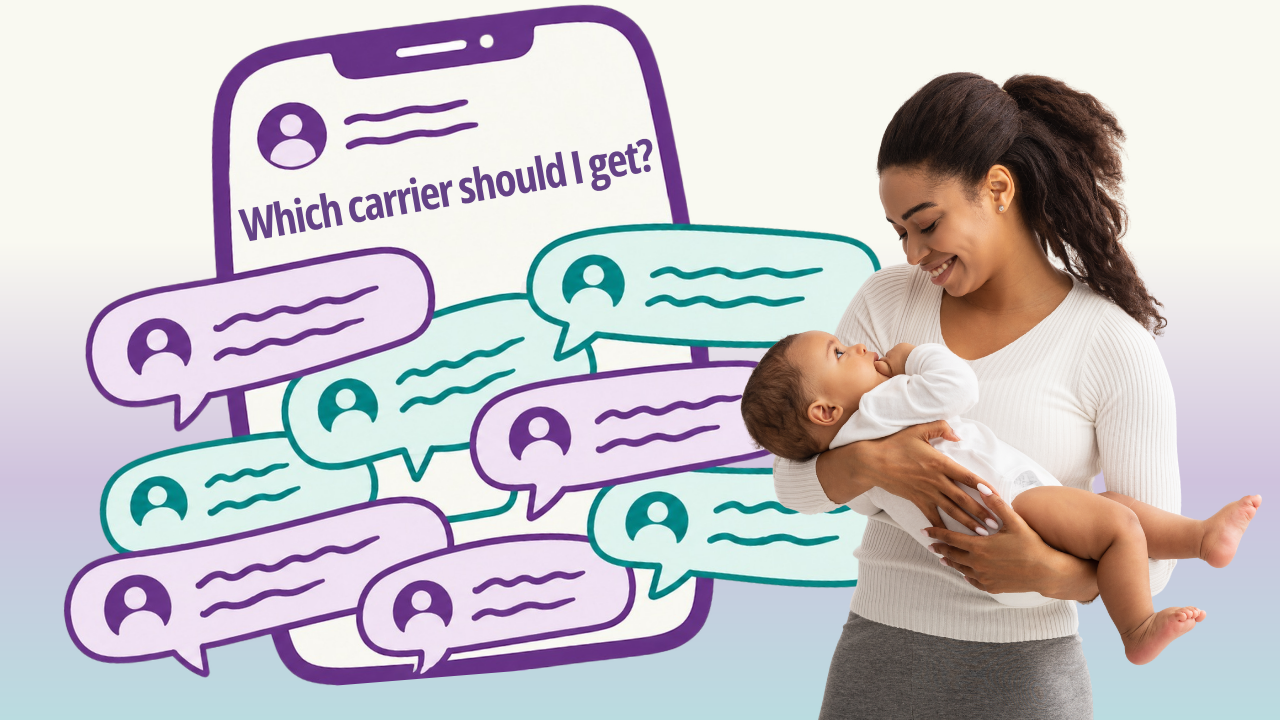
Parent
“Which one should I get, the BabyBjörn One Air or the Ergobaby Omni Deluxe? I’m due at the end of November, need to put it on by myself, and I’ll also be chasing a toddler.”
Commenter 1
“Definitely the Ergobaby. It gives a much more supportive fit.”
Commenter 2
“Neither! Get a Hope & Plum Sprout. It’s so easy to put on by yourself.”
Commenter 3
“I’d get a Happy Baby OG instead.”
Commenter 4
“Look at the LennyLamb Upgrade Pro. It will actually fit from newborn through toddlerhood.”
Commenter 5
“I love my Tula Explore!”
Commenter 6
“Get the WildBird. It’s SO comfortable.”
Commenter 7
“Anything with crossed straps is a struggle. I don’t know how people call them easy.”
Commenter 8
“Really? I think crossed straps are the easiest!”
Parent
“Okay…now I’m choosing between eight carriers instead of two. 😂”
Babywearing educator
“Before adding another carrier to the list, let’s narrow down what you actually need. Do you want something especially simple for the newborn stage, or something more adjustable that may last longer? Would you rather reach for a buckle behind your back or cross straps across your body? Those details may matter more than which carrier gets the most votes.”
*This is a condensed, anonymized version of a real online babywearing discussion.
You’ve seen this thread. Probably this week. A parent pops in with two carrier options and a pretty clear set of needs: a newborn on the way, a toddler to chase, and nobody around to help with buckles. Twenty minutes later they’re considering eight carriers and two strangers are debating the ease of crossed straps.
There’s a lot of good in a thread like this. People show up, they’re excited for this parent, and they genuinely want to help. Somebody might even discover a carrier they end up loving. But reading it as an educator, you’re also watching a parent get more confused with every comment, you might even have a carrier in mind for them, and you’re sad for what is left out of the conversation and consideration.
That’s the moment I want to talk about. Not which carrier is right, but what we do… with what we know… when we step into a conversation like this one.
•••
Your Carrier Knowledge Is the Easy Part
By the time you finish reading that first post, you’ve already run through the imagined situation, thought about newborn fit, panel and seat adjustments, strap style, maybe even rapid ‘deployment’. You know which of those carriers will take a lot of adjusting to fit a seven-pound baby and which one will be outgrown by 15 pounds.
The harder skill is holding that back long enough to find out what this parent needs.
“Which carrier should I get?” is rarely the actual question. Underneath it are things like:
“Can I do this alone?”
“Will it be comfortable?”
“Will it still work at six months? (Will I still be wearing that long?!)”
“Will I be able to get this on while my toddler is running toward the street?”
“Am I about to waste a lot of money?”
A brand or carrier name doesn’t answer any of that. Your questions might, but it’s the ‘thinking’ about those questions that truly helps the decision-maker.
•••
Easy for Whom?
Commenters 7 and 8 say it all. Same strap style, opposite experiences, both completely sincere. We see the same carrier called “so easy” and “impossible” in one thread all the time. Beautiful. Thanks, commenters 7 and 8.
You know ease of use lives in the match-up between the practice, carrier, wearer, baby, and the situation. Most caregivers don’t know that yet. So instead of casting your own vote for what’s easy, give them a way to figure out what’s easy for them:
- Would you rather reach behind your back for a buckle, or cross straps over your front?
- How’s your shoulder mobility?
- Will you have a minute to set it up, or do you need something you can grab while your toddler is already heading for the door?
- Will you practice before baby arrives or wait?
Once a person answers questions like those, half the carrier list drops off on its own. Play with them in person and one or two carriers will shine brighter than all the rest - for THIS person.
•••
One Carrier or Two Is Their Call
Caregivers hear constantly that they should find the one carrier that does it all. A lot of marketing dollars over the years have been spent on that message. You and I know that’s always a tradeoff - you’re compromising somewhere, even if you don’t realize it at first. A snuggly newborn carrier can be the simplest thing in the world for those first months, and then it starts to get diggy or saggy and not supportive; it’s been outgrown. A newborn-to-toddler carrier lasts longer but often comes with many more adjustments, more bulk, and a steeper learning curve right when the parent is most tired.
Our job isn’t to decide which of those is the best option. It’s to provide basic information and guidance, lay the trade-off out clearly for the person to discover, and then let them pick. Someone planning to wear constantly in the fourth trimester might happily pay for a carrier that shines for six months. Another person thinks they will use it occasionally, and so they want one carrier and don’t mind a few extra steps or buckles.
Both are good decisions when they’re made intentionally. I would just say, though, that often a person thinks they will wear it ‘occasionally’ only to find that the baby wants to be worn all the time, and then the tradeoff is more extreme. But at least they would know where to turn to for help.
•••
Translating the Number on the Box
You and I already know a weight range doesn’t tell you how long a carrier will fit, and fit well. Comfort and panel width/height usually run out before the weight limit does, and a carrier rated from birth can still take real work to get snug and supportive on a small newborn.
What helps is having a one-line way to say that in a comment, because the parent has no reason to question the number until someone gives them one:
“The weight range tells you what weights the carrier is tested for, not how long it will fit your baby or you. Panel height, seat width, and comfort usually decide that first.”
If they want to go deeper, that’s a great conversation to have in a class or session, where you can explore various options with a doll or, if the baby is already here, then with the baby, the carrier, and the wearer together.
•••
Head Support in Two Sentences
The head support question shows up in almost every newborn thread, and it’s an easy place to slip into a lecture. You know the answer: head support comes from the caregiver’s body and a snug, supported position with the fabric of the carrier supporting both. It doesn’t come from a headrest or a tall panel - not really. It might be aided at times by those things, but real support of the newborn head comes from the caregiver’s body where the baby is being held.
In a comment section, keep it short:
“The carrier’s job isn’t to hold the baby; it’s to hold you two together. Your body holds the baby, head and all. The carrier’s job is to hold the baby’s body snugly enough to you that their head can rest against you, with their face visible and clear.”
We want the baby to be able to turn their head, push off a bit from their caregiver; we don’t want them pinned in place or placed into a carrier - we place babies onto bodies. That alone clears up a lot of confusion. Save the full positioning and airway walkthrough for when you have the parent’s attention.
•••
Making Room for Other People’s Favorites
The people recommending carriers in these groups are usually parents sharing what worked for them, and that’s useful information. It goes sideways when “this worked for me” becomes “this is the best one,” or “I couldn’t reach this buckle” becomes “you can’t use this alone.” Which luckily is pretty rare these days.
You don’t need to correct anyone to fix that. Give their recommendation some context instead:
“That carrier works really well for a lot of families, especially if you like a lightweight apron-style waist. If you want more padding or structure, it might not feel as supportive. It’s really tough to know what might be best without some exploration. Great start here, though.”
Nobody gets shut down, the parent gets a clearer picture, and you come across as someone who knows the whole landscape rather than the person with the loudest opinion. In a space where you want to be seen as a trusted resource, that’s worth a lot.
•••
You Don’t Have to Name a Winner
Sometimes the most helpful comment doesn’t name a carrier at all. For this parent, it might look like:
“Between those two, one gives you a lot more adjustability. Before you buy, think about whether you’d rather do a back buckle, crossed straps, or a lighter apron-style waist, since that will probably decide which one feels easy for you. And with a toddler running around, I’d look hard at how fast each one goes on and whether you can reach every buckle on your own.”
That comment pulls the conversation back to this parent’s actual day. It also shows them, without any pitch, what working with an educator feels like. The parents who get asked good questions in a Facebook thread are often the ones who reach out later for a fitting.
•••
Narrowing the List, Not Adding to It
When a parent is overwhelmed, ten more options rarely help. What you bring isn’t knowing the most brands. It’s helping someone narrow the field by figuring out what stage they’re preparing for, how they like to move, how much structure and adjustability they’re comfortable with, whether simplicity or longevity comes first, and where/when they’ll actually be wearing.
They might still end up with three good options, and that’s fine. The goal was never one perfect answer. It was a decision they understand how to make.
•••
The Question Behind the Question
There is usually more to the picture. Instead of “Which carrier is best?” the question the parent might really be asking is:
“What carrier will make everyday life easier for me?”
That’s the heart of babywearing education. Not handing out our favorites, but helping families understand fit, function, and tradeoffs well enough to choose the best options for themselves. The best carrier isn’t the one with the most votes in a Facebook group. It’s the one that works for this wearer, this baby, and this season of their life.