The Power of the Network - what 5 events in one year have uncovered
Sep 15, 2026
Over the last year, I’ve hosted 5 regional events. Each city had its own vibe and feel, as expected, and each brought together babywearing educators, allied health professionals, parents, and enthusiasts in different mixes. What are some of the similarities between these events, though? Well, I’m still processing the bigger picture, because I’ve just wrapped the last event for 2026, but here’s one thing that jumped out at me now that my mind is calming down some.
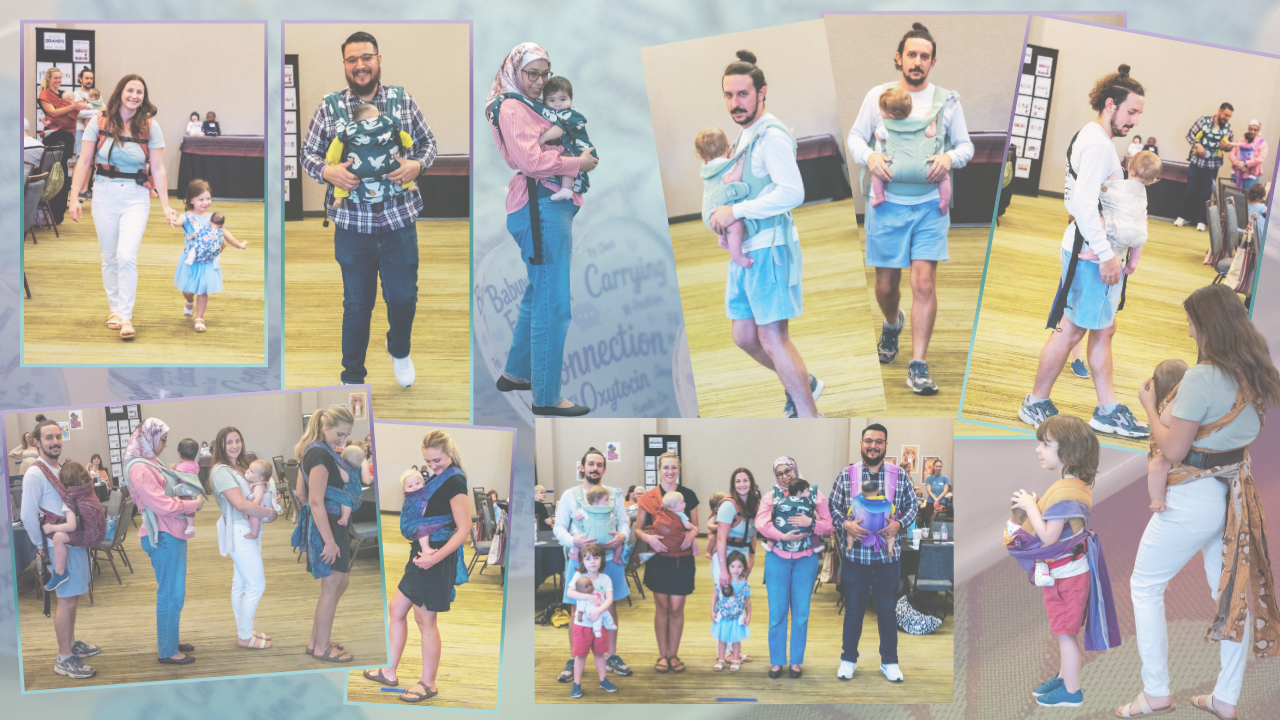
There’s a world of differences between getting a carrier onto a caregiver/baby pair and teaching them, let alone consulting on the process. During The Babywearing Weekend and HELD events, we asked parents and babies to join us and model carriers for us; just as models wear a new dress or style down a runway, we ask them to do the same.
What’s the point?
The obvious is seeing a carrier in action. For an educator, seeing the parent, baby, and carrier in motion allows the rhythmic movement to calm both parties. They relax their muscles, babies tend to reduce extraneous movements, and for us, we begin to see the moments after the caregiver’s protective self-measures slip away.
We might notice a baby settle lower on a caregiver, slack in straps but not in the supportive cross passes of the wrap-style strap. Or notice shoulder straps start on the path to neck creep. The compensatory movements and bracing that might happen while standing still often shift when they start to walk, so the trained eye can see where suggested adjustments could be made - both immediately and then on-the-fly for the caregiver.
For parents and caregivers who are new to babywearing, the difference between tolerable and amazingly comfortable isn't intuitive. Tolerable is better than extended in-arm holding, and how can they know if it could feel better unless they experience it?
How can we help them get to ‘amazing’ if we don’t take the time to SEE it? How can we see the shoulder shifts, the subtle arm motions, the tugging, the baby’s leaning if we don’t watch? How can we support their natural instinctive movements if we don’t notice them first?
And each of those micro-things gives the trained eye information that can be turned into immediate feedback and options for the caregiver.
• • •
This isn’t theoretical; it is actionable data: both on the carriers and on how caregivers adapt and move.
For the carrier part, it answers questions like,
"Does this fit with a small baby and a tall, broad-shouldered caregiver?"
"How, then, does it fit with an active baby that’s leaning and straining to engage?"
"How easy is it to adjust the straps if you’ve never used it before?" A brand-new carrier can feel radically different from a well-loved one, and sure some clients may have broken-in hand-me-downs, but most will have new carriers and babies that grow and start moving quickly.
At our events, all the carriers are brand spanking, right-out-of-the-box, new. This lets us see how the brand presents the carrier and what the initial settings are, and what parts are included (or easily lost)
So, while the smiles and single static pics shared here do let you see what I’m talking about in this post, they don’t show the before and after, the motion, or the parent instincts we supported.
Yet, I hope you can still see the variety and unique opportunity this exercise provides us as we watch the ‘walk the runway.’