Notes From the NICU Series | Beyond the Carrier: What I Learned Visiting Two NICUs
Oct 09, 2026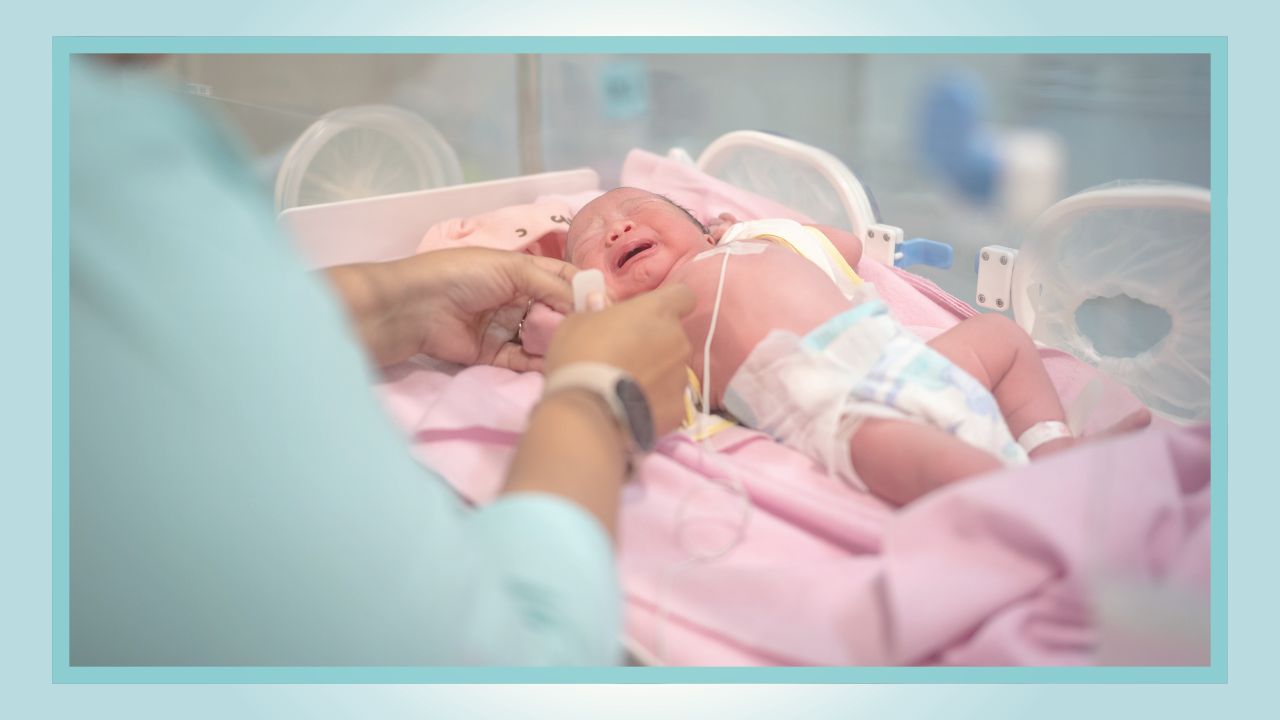
I was standing beside a baby's bed in a NICU in Phoenix, watching a nurse provide care to a particularly fragile infant.
The baby startled easily, and I watched as the nurse responded to one of those startles with careful, sensitive handling. She spoke to the baby, used their name, and seemed continually aware of the infant's responses as she provided care.
At one point, she looked up and acknowledged my presence, too. We'd already been introduced, but I was struck by how attentive she was to the entire environment while remaining so focused on her patient.
I found myself paying close attention to the communication happening between them.
And then I began thinking about babywearing.
I'd come to Phoenix to visit two NICUs where I'd trained healthcare teams in infant carrying. I wanted to better understand how they'd incorporated babywearing into their units, what was going well, and where implementation was proving difficult.
But watching this nurse reminded me of something that's central to the way I teach infant carrying. Before we ever introduce a carrier, we need to meet and understand the baby that will be carried.
That includes their physical needs, their sensory experience, their medical stability, and the many ways they communicate comfort, distress, and readiness to interact.
•••
What the baby was telling us
When we talk about responsive caregiving, we often discuss observing infant cues and adjusting our behavior accordingly.
As healthcare professionals, you're probably quite familiar with this idea. But I wonder how often we have the opportunity to pause and observe what that communication looks like in everyday care.
In this instance, I watched an infant startle and a nurse recognize and respond to that communication.
The baby had no way of explaining what they'd experienced, but their body was communicating. And the nurse was paying attention.
For a newborn, particularly one who is medically vulnerable or developmentally immature, the sensory environment can be demanding. Touch, movement, sound, light, and changes in position are all experiences the baby must process and respond to.
The nurse's response offered a lovely example of care being adapted to an individual infant's behavior and tolerance.
This is consistent with the principles of individualized developmental care, including the NIDCAP approach, which emphasizes observing infant behavior, recognizing signs of stress and stability, and adapting handling and the surrounding environment accordingly.
And I couldn't help connecting that to the work we're doing with babywearing.
When we introduce infant carrying into a hospital, we're introducing another opportunity for sensory experience and interaction. The position of the baby's body, the pressure and support provided by the carrier, the caregiver's movement, and the infant's responses all need to be considered.
The carrier itself is only one part of the equation.
•••
Two NICUs, two different experiences
One of the most useful aspects of these visits was seeing just how different the two units were.
You might assume that NICUs would have fairly similar physical environments and workflows. After all, they're caring for a similar population of patients and working within established clinical standards.
Yet these two departments had striking differences in their layouts, lighting, temperature, colors, and organization.
One was particularly expansive, with labor and delivery, postpartum, and NICU services situated within a large connected area. I found myself thinking about how the physical relationship between these departments might influence family movement, staff interactions, and continuity of care.
The bedside environments were different, too.
And when you're trying to establish a babywearing program, those differences create practical questions that are difficult to fully appreciate from a classroom or online training.
Where are the carriers stored?
How accessible are they to staff?
What happens when a carrier needs laundering?
How does the room layout affect the preparation and transfer of an infant into a carrier?
What competing demands might make carrying possible on one shift and much more difficult on another?
These are some of the questions I was eager to explore with the teams.
Because even when a team is enthusiastic about babywearing, completing the training is only one part of incorporating it into ongoing clinical care.
•••
What does the research tell us?
I was also reminded of research conducted by neonatal nurse practitioner Lisa M. Grisham and her colleagues examining babywearing in the NICU.
In a 2020 study involving infants experiencing neonatal abstinence syndrome, researchers found decreases in infant heart rate during babywearing, whether the infant was carried by a parent or another adult. The decreases were larger when babies were carried by their parents, but the findings suggested that carrying by nonparent caregivers could also provide comfort.
A related study, published in 2021, explored NICU nurses' perceptions of babywearing for these infants. The nurses identified benefits such as infant consoling and greater mobility for adult caregivers, but also raised practical concerns about infection control, ongoing training, and patient assignments.
I found myself thinking about those findings as I spoke with the teams in Phoenix.
The conversations weren't simply about whether babywearing was a good idea. We were discussing how to make it workable within a particular unit, with its own physical constraints, patient population, staffing responsibilities, and existing systems.
A 2023 scoping review by Grisham and colleagues also explored the broader biological and behavioral effects of babywearing. The review identified several promising areas, including responsiveness, comfort, physiological effects, and caregiver experience, while emphasizing that more research is needed to inform clinical recommendations.
I appreciate that distinction. We have good reasons to explore infant carrying as part of responsive care, and we also have a responsibility to be clear about what the evidence does and doesn't yet establish.
•••
Seeing the work differently
I left these visits thinking about how much there is to learn from the teams who are doing this work every day.
They're the ones discovering which procedures need refinement, how to manage carriers efficiently, and when carrying fits naturally into patient care.
They're also the ones who can help identify the less obvious barriers, including the questions and concerns that families may have when staff offer to wear their babies.
And for me, visiting the units offers something I can't fully get from teaching remotely. I can see the spaces, observe the workflows, and better understand the circumstances in which these teams are trying to put their training into practice.
I also get to witness moments of care that remind me why we began doing this work in the first place.
That nurse and her tiny patient have stayed with me. I keep thinking about the way she recognized the infant's startle and responded, the attention she gave to the baby's communication, and the awareness she maintained of the environment around them.
I hope that when we teach babywearing, we help strengthen that same capacity for observation and response. The mechanical skills of carrying are essential, particularly in a clinical setting, but they exist within a much larger experience of caring for an individual baby.
And the more I learn about how different units function, the better equipped I am to help healthcare teams incorporate carrying in ways that are appropriate, practical, and responsive to the infants and families they serve.
I'm grateful to both teams for welcoming me into their units and for sharing so openly what they've learned.
This article is part of my Notes From the NICU series. In the next piece, I'll explore a question that came up during my visits and that I've heard from other healthcare teams as well: What happens when parents prefer that staff not wear their babies, and how do we approach that conversation while considering the baby's experience?
•••
Research referenced
Williams, L. R., Gebler-Wolfe, M., Grisham, L. M., & Bader, M. Y. (2020). "Babywearing" in the NICU: An Intervention for Infants With Neonatal Abstinence Syndrome. Advances in Neonatal Care, 20(6), 440–449.
Williams, L. R., Grisham, L. M., et al. (2021). Nurse Perceptions of Babywearing for Neonates With Neonatal Abstinence Syndrome in the Neonatal Intensive Care Unit. Advances in Neonatal Care, 21(1), 23–31.
Grisham, L. M., Rankin, L., Maurer, J. A., Gephart, S. M., & Bell, A. F. (2023). Scoping Review of Biological and Behavioral Effects of Babywearing on Mothers and Infants. Journal of Obstetric, Gynecologic & Neonatal Nursing, 52(3), 191–201.
NIDCAP Federation International: Frequently Asked Questions, including individualized developmental care and interpreting infant behavioral cues.
Read the Notes From the NICU series
- The Stories That Stay With Us
- Beyond the Carrier: What I Learned Visiting Two NICUs (you're here)
- Who Comforts the Baby When Parents Can't Be There?